
APNIC is the Regional Internet Registry administering IP addresses for the Asia Pacific
APNIC is the Regional Internet Registry administering IP addresses for the Asia Pacific

APRICOT 2027 Call for Presentations is open now
By Mark Duffell
If you have interesting Internet operations research or experience to share, submit a presentation for APRICOT 2027. Submissions close on 25 January 2027.
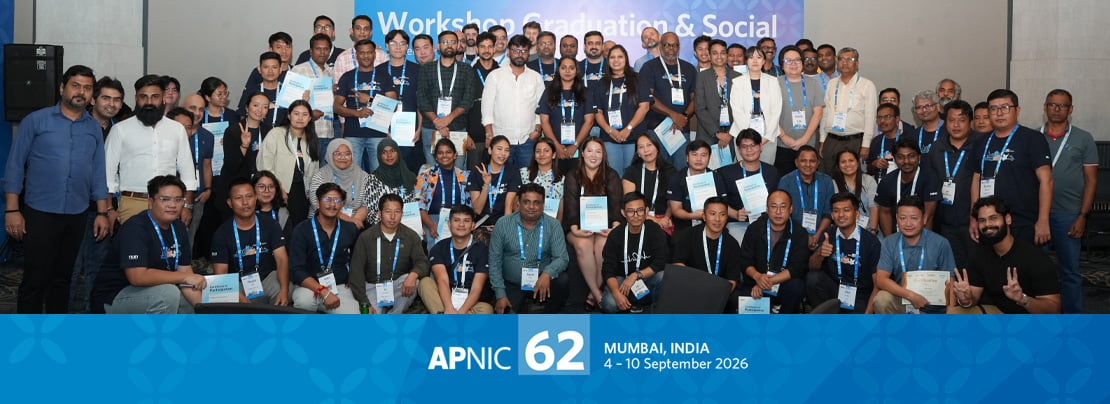
APNIC 62 workshops help build network security, automation, and routing expertise across the region
By Sheryl Hermoso
More than 80 network engineers and operators strengthened their skills at APNIC 62 through hands-on workshops in network security, automation, and next-generation service provider routing.
Homepage highlight

Call for presentations is open!
The APRICOT 2027 Program Committee (PC) is seeking contributions of presentations and tutorials for APRICOT 2027. Submissions close 25 January 2027.

One week on the APNIC honeynet: 99,000 IP addresses and 173 million events
By Adli Wahid
Nearly 99,000 unique IP addresses interacted with APNIC's honeynet in just one week, generating 173 million events across SSH, Telnet, SMB, VPN, web, and Android services. The results show that long-known botnets, weak credentials, and unpatched vulnerabilities continue to drive large-scale malicious activity across the Internet.

Your most pressing questions about ASPA, answered
By Tom Harrison
Answering some of the most frequently asked questions about ASPA.

Turning IPv6 tunnels into programmable delay lines for pulsing DoS
By Le Gai
Guest Post: TED shows how permissive tunnel decapsulation and inconsistent IPv6 Extension Header handling can focus low-rate traffic into short, high-rate bursts.

Rolling the root key: What happened?
By Geoff Huston
The DNS root key was rolled on 11 October 2026. Was the key roll a success?

Being connected is not enough: Territorial inequalities in fixed-Internet access and performance
By Wilson Ramirez
Guest Post: High aggregate Internet penetration can mask significant territorial inequalities. Using the Dominican Republic as a case study, this analysis shows that access and network performance vary widely across provinces, highlighting why the digital divide is about more than simply being connected.

INNOG 9 at APNIC 62: Building resilient infrastructure for the next Internet
By Timothy Hildred
INNOG 9, co-located with APNIC 62, offered a distinctly operational perspective, drawing on experiences from India and Bangladesh. Topics ranged from IPv6 deployment and submarine cable infrastructure, to lessons learned from Internet disruptions.